Ask any golfer whether they prefer links or parkland courses and you'll get an opinion strong enough to start an argument. These two styles represent fundamentally different philosophies about what golf should be, and playing both will make you a more complete player.
What Defines a Links Course
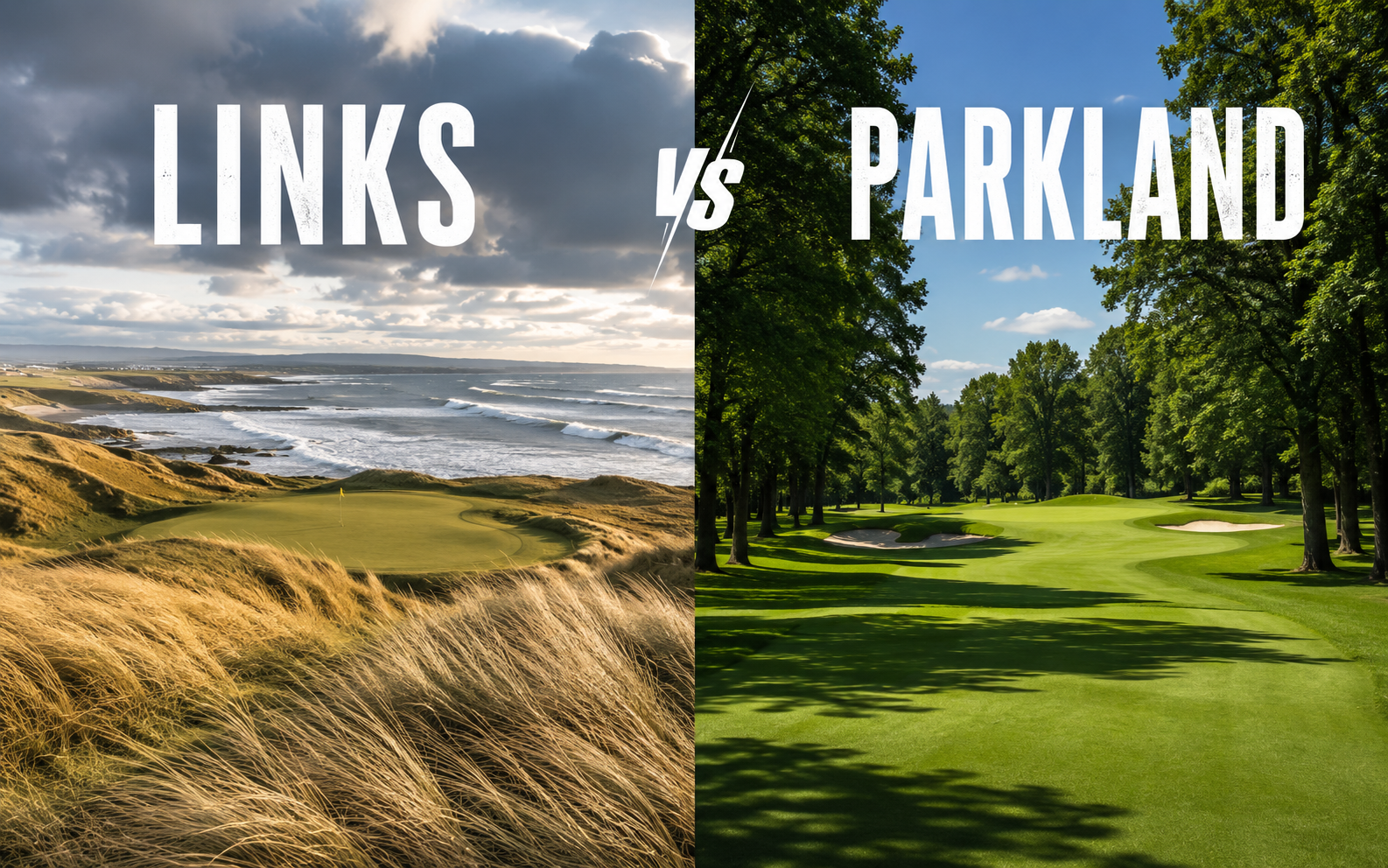
True links golf is played on coastal land between the sea and the farmland further inland. The terrain is sandy, undulating, and covered with fescue grasses that turn golden brown in summer. There are few trees. Bunkers are deep pot bunkers with vertical faces. And the wind is constant, unpredictable, and often brutal.
The Old Course at St Andrews is the template. Holes run out along the coastline and back again, often sharing enormous double greens. The fairways are wide but deceptive. What looks like a generous landing area can funnel your ball into a hidden bunker or a swale that kicks it 30 yards offline. Links golf rewards creativity, imagination, and the ability to keep the ball low when the wind picks up.
The Parkland Experience
Parkland courses are what most American golfers grow up playing. They're built on inland terrain, often carved through forests or rolling meadows. Tree-lined fairways define the holes. Greens are elevated and well-manicured. Water hazards appear frequently, and the rough is thick, lush, and punishing.
Augusta National is the most famous parkland course in the world. Every hole is framed by towering pines and flowering azaleas. The fairways are immaculate. The greens are fast enough to make a tour professional nervous. Parkland golf is target golf. You aim for specific landing zones, shape shots around obstacles, and attack flagstick positions with precision approaches.
How They Change Your Game
Playing links golf forces you to develop a ground game. Bump-and-run approaches replace high flop shots. You learn to use the terrain instead of trying to fly the ball over it. Wind management becomes a skill unto itself. Choosing to hit a knockdown 6-iron instead of a full 8-iron is a decision you'll make dozens of times per round.
Parkland golf builds your aerial game. You need to carry hazards, hold greens with backspin, and shape the ball around tree lines. Distance control matters enormously because you can't rely on the ball bouncing and rolling onto the putting surface. It's a more vertical, power-oriented style of play.
Which Should You Play
Both. Seriously. If you only play parkland courses, you'll struggle the first time wind and firm turf take your comfort zone away. If you only play links, you'll be overwhelmed by the target golf demands of a tight parkland layout. The best golfers in the world are the ones who can adapt.
In the United States, Bandon Dunes in Oregon offers the closest thing to authentic Scottish links golf you'll find without a passport. On the parkland side, courses like Pinehurst No. 2 and Bethpage Black deliver world-class experiences at public course prices. Play them all. Your game will thank you.