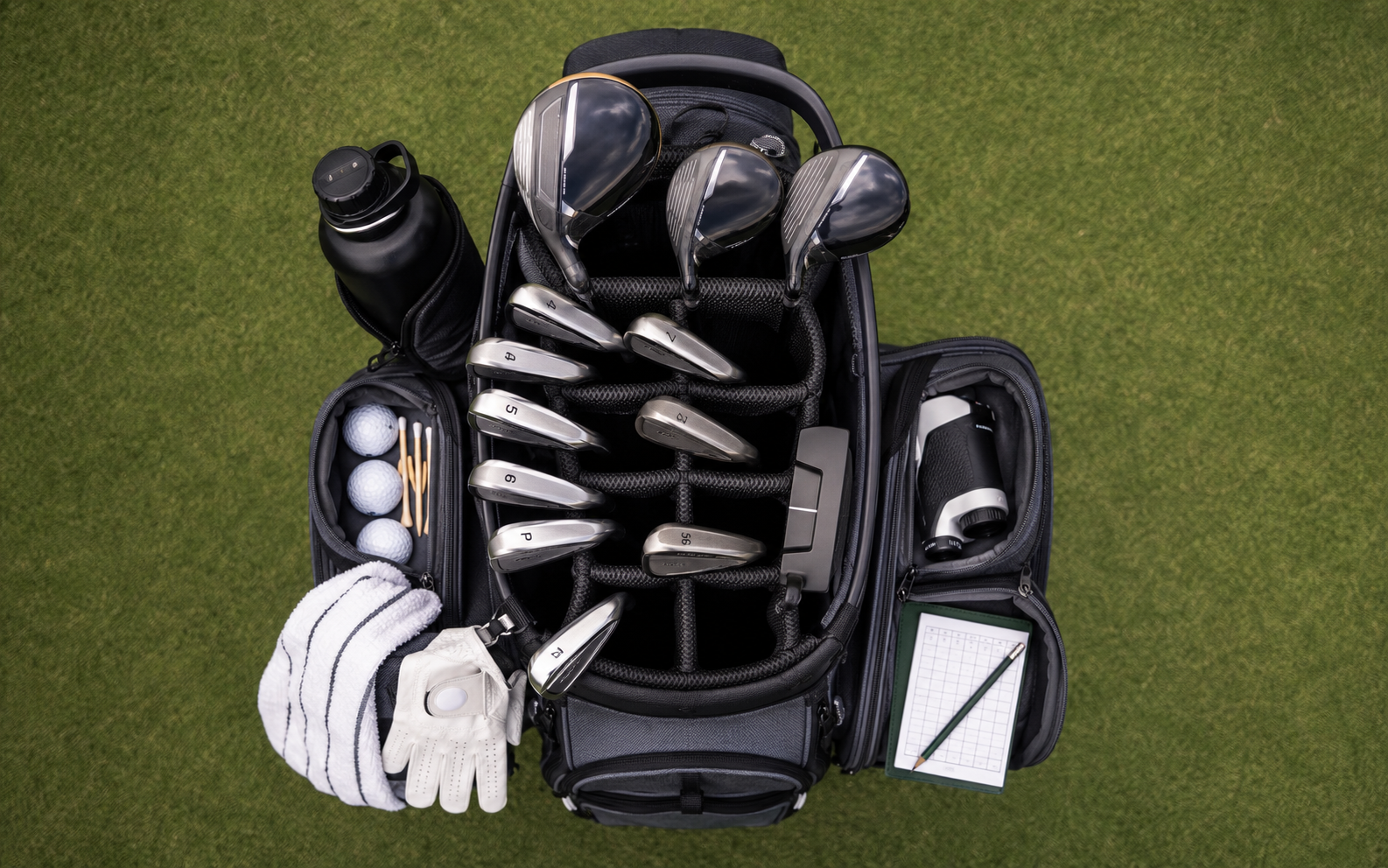
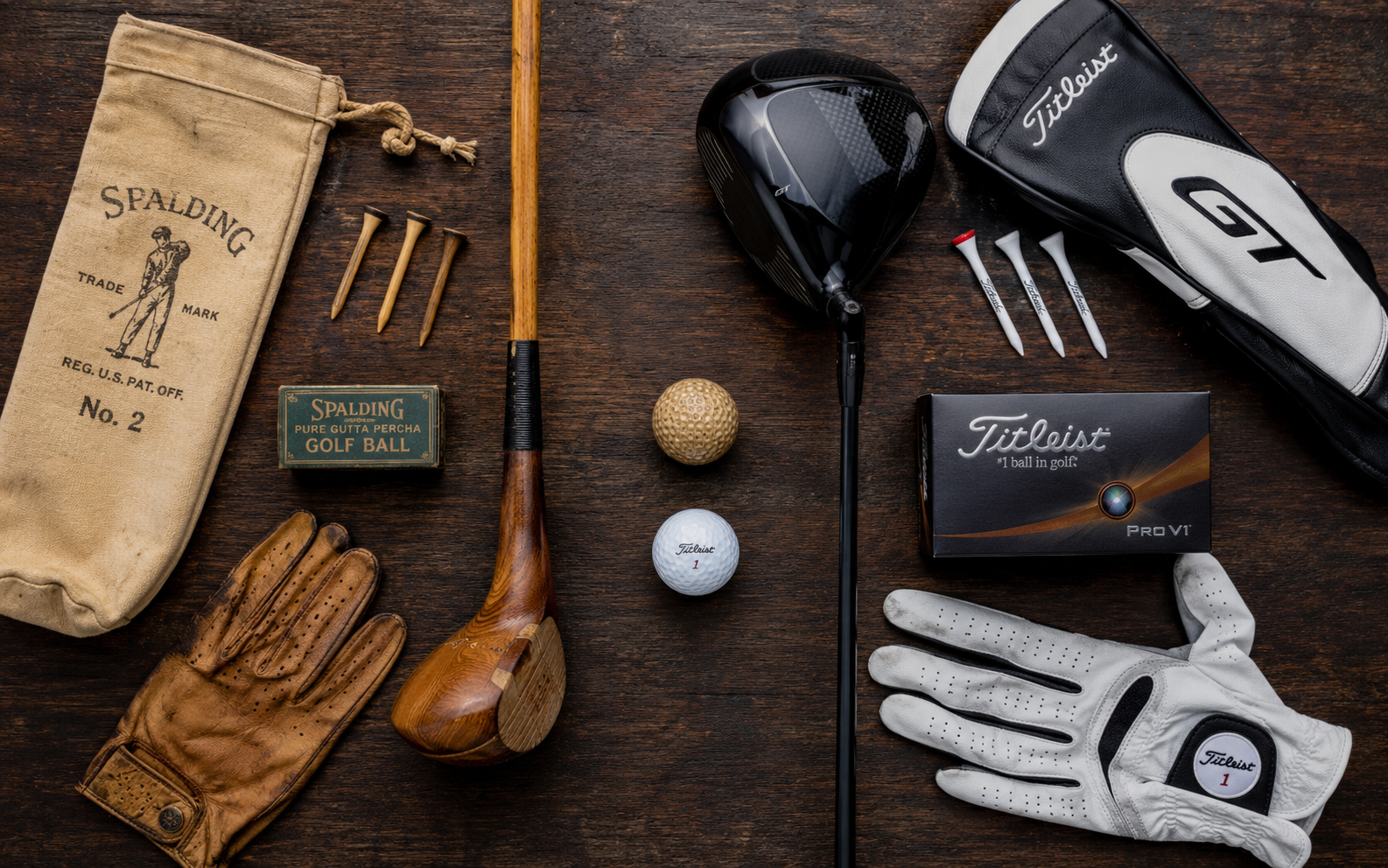
Pick up a golf club from 1920 and compare it to anything in your bag today. They're barely the same tool. The evolution of golf equipment is one of the most dramatic transformations in all of sports, driven by materials science, aerodynamics research, and an endless pursuit of distance.
The Hickory and Persimmon Years
For most of golf's history, clubs were made from wood. Hickory shafts paired with persimmon heads were the standard from the late 1800s through the 1970s. These clubs demanded precision. The sweet spot was tiny, and mishits punished you immediately. Players developed compact, controlled swings because the equipment required it.
Golf balls followed a similar arc. The gutta-percha ball replaced the featherie in the mid-1800s, and the wound rubber-core ball arrived around 1900. Each jump added distance and consistency, but the gains were incremental compared to what was coming. The PGA's historical archives document how each equipment era shaped the way professionals competed and trained.
Steel and the Modern Swing
Steel shafts were approved for competition in 1924, though they didn't become dominant until the 1930s. The change was seismic. Steel was more consistent than hickory, allowing manufacturers to produce matched sets for the first time. Players could swing harder without worrying about shaft flex varying from club to club.
The real explosion came in the 1990s with titanium drivers. Callaway's Big Bertha, launched in 1991, proved that larger clubheads could be both lighter and more forgiving. By 2000, 460cc titanium drivers had become standard, and average driving distances on the PGA Tour jumped from 257 yards in 1990 to 279 yards by 2005.
The Ball Changed More Than the Club
Modern multi-layer golf balls are engineering marvels. A typical tour-level ball has three to five layers, each designed for a specific function. The core maximizes energy transfer. The mantle layers control spin. The urethane cover provides feel and greenside control. Companies like Titleist and Bridgestone spend millions annually on aerodynamic dimple patterns alone.
The result is a ball that flies farther and straighter than anything previous generations could have imagined. Combined with modern club technology, the average amateur hits the ball 20 to 30 yards farther than their counterpart from the 1990s, even without improving their swing.
Where Equipment Goes Next
The governing bodies are pushing back. The USGA and R&A have proposed rollback specifications for golf balls used in elite competition, concerned that courses can't keep up with how far players hit. The average Tour player now drives the ball over 300 yards, making classic courses play shorter than their designers intended.
For recreational golfers, though, technology keeps making the game more enjoyable. AI-designed clubfaces, adjustable weighting systems, and custom fitting tools mean that even a $400 driver can be optimized for your specific swing. The gap between a tour pro's equipment and yours has never been smaller. The gap in skill, unfortunately, remains enormous.